In today's fast-paced world, many people are looking for ways to improve their health, reduce stress, and create a more balanced lifestyle. As a result, wellness routines have become increasingly popular. Social media is filled with morning rituals, self-care practices, fitness plans, and productivity hacks that promise to transform your life.
However, many wellness routines look perfect online but are difficult to maintain in real life. Trying to follow an overly complicated schedule can quickly become overwhelming, causing people to give up after only a few days or weeks.
The truth is that an effective wellness routine doesn't need to be complicated. In fact, the most successful routines are often built on simple habits that fit naturally into your lifestyle.
A sustainable wellness routine focuses on consistency rather than perfection. It supports your physical health, mental wellbeing, emotional balance, and overall quality of life while remaining realistic and achievable.
In this guide, you'll learn how to create a wellness routine that actually works, how to avoid common mistakes, and how to build healthy habits that can support your wellbeing for years to come.
What Is a Wellness Routine?
A wellness routine is a collection of intentional habits and activities that support your overall health and wellbeing. Unlike short-term challenges or extreme lifestyle changes, a wellness routine is designed to be sustainable and adaptable to your individual needs.
Wellness goes beyond physical health. A balanced wellness routine often includes practices that support:
- Physical health
- Mental wellbeing
- Emotional balance
- Stress management
- Healthy relationships
- Personal growth
- Self-care
For some people, a wellness routine may include regular exercise and healthy eating. For others, it might focus on mindfulness, better sleep habits, journaling, or creating healthier boundaries with technology.
The most important aspect of any wellness routine is that it aligns with your personal goals and lifestyle.
Rather than copying someone else's routine, focus on creating one that works for you. What feels sustainable and enjoyable is far more likely to become a lasting habit.
Why Most Wellness Routines Don't Last
Many people start a new wellness routine feeling highly motivated. They purchase planners, create detailed schedules, and set ambitious goals. Yet after a short period of time, many of these routines begin to fall apart.
One common reason is trying to change too many things at once.
Imagine someone who decides to wake up two hours earlier, exercise daily, meditate for thirty minutes, prepare every meal from scratch, drink more water, journal every evening, and eliminate all unhealthy habits overnight. While these goals may sound positive, maintaining so many changes simultaneously can become exhausting.
When routines feel overwhelming, consistency becomes difficult.
Another common mistake is relying solely on motivation. Motivation naturally rises and falls. Some days you'll feel inspired, while other days you'll feel tired, busy, or distracted.
Sustainable wellness routines are built on habits rather than motivation alone. Habits allow healthy behaviors to continue even when enthusiasm temporarily decreases.
Additionally, many people focus too much on perfection. Missing one workout, eating an unhealthy meal, or skipping a journaling session doesn't mean you've failed. Long-term wellness is about progress, not perfection.
Understanding these challenges can help you create a routine that remains realistic and sustainable over time.
Start with Small Habits
The most effective wellness routines often begin with surprisingly small changes.
Small habits are easier to maintain, require less effort, and create a strong foundation for future growth. Instead of trying to completely transform your lifestyle overnight, focus on one or two simple actions that you can consistently repeat.
Examples of small wellness habits include:
- Drinking a glass of water after waking up
- Taking a five-minute walk
- Stretching for a few minutes each morning
- Writing down three things you're grateful for
- Going to bed fifteen minutes earlier
- Taking short breaks from screens during the day
These habits may seem insignificant at first, but their impact grows over time through consistency.
Small successes also build confidence. When you successfully maintain a simple habit, you're more likely to add additional healthy behaviors in the future.
Self-care is an excellent example of a small but powerful wellness habit. Taking a few moments each day to slow down, relax, and reconnect with yourself can help reduce stress and improve overall wellbeing.
Remember that wellness is not about doing everything perfectly. It's about making small choices consistently and allowing those choices to accumulate into meaningful results.
Prioritize Physical Wellbeing
Your physical health forms an important foundation for overall wellness. While every person's needs are different, certain habits can support a healthier lifestyle and improve daily wellbeing.
Physical wellness often includes:
- Regular movement
- Balanced nutrition
- Adequate hydration
- Quality sleep
- Preventive health care
Exercise doesn't need to be intense or time-consuming to be beneficial. Walking, stretching, yoga, cycling, and other forms of movement can all contribute to a healthy lifestyle.
The goal is to find activities that you genuinely enjoy. When movement feels enjoyable rather than like a punishment, consistency becomes much easier.
Similarly, healthy eating doesn't require extreme restrictions. Focus on adding nourishing foods to your diet rather than obsessing over perfection.
Simple improvements such as eating more fruits and vegetables, drinking enough water, and preparing balanced meals can make a significant difference over time.
Physical wellness should support your life, not control it. Creating realistic habits that fit your schedule will help ensure long-term success.
Another important component of physical wellbeing is sleep. Many people focus heavily on exercise and nutrition while overlooking the importance of rest and recovery.
Quality sleep helps support energy levels, mood, focus, and overall health. Creating a consistent sleep schedule and maintaining a relaxing bedtime routine can significantly contribute to long-term wellness.
Remember that physical wellness is not about achieving perfection. It's about creating sustainable habits that help you feel your best and support your daily life.
Support Your Mental and Emotional Health
True wellness extends far beyond physical health. Mental and emotional wellbeing play a crucial role in how we experience daily life, handle challenges, and maintain healthy relationships.
Unfortunately, mental health is often overlooked when people build wellness routines. Many individuals focus exclusively on fitness goals while neglecting stress management, emotional balance, and self-care.
Supporting your mental wellbeing can include simple practices such as:
- Practicing mindfulness
- Journaling regularly
- Spending time in nature
- Taking breaks from technology
- Reading inspiring books
- Connecting with loved ones
- Setting healthy boundaries
Mindfulness encourages you to focus on the present moment rather than becoming overwhelmed by worries about the future or regrets about the past.
Journaling can also be a valuable tool for self-reflection. Writing down your thoughts, goals, and experiences may help you gain clarity and process emotions more effectively.
Even small moments of relaxation throughout the day can help reduce stress and improve emotional wellbeing.

Spending time outdoors is another excellent way to support mental wellness. Nature can provide a sense of calm, encourage movement, and create opportunities to disconnect from daily stressors.
Remember that mental and emotional wellness require ongoing attention, just like physical health. Small daily practices often create the most meaningful long-term benefits.
Create a Routine You Can Maintain
One of the biggest mistakes people make when building a wellness routine is creating a schedule that isn't realistic.
A routine that looks impressive on paper may not fit your lifestyle, responsibilities, or energy levels.
Instead of asking yourself what an ideal wellness routine should look like, ask yourself what you can realistically maintain over the long term.
Consider factors such as:
- Your work schedule
- Family responsibilities
- Available free time
- Your current habits
- Your personal preferences
- Your energy levels throughout the day
For example, if waking up at 5:00 a.m. feels impossible, forcing yourself to follow a routine built around early mornings may not be sustainable.
Likewise, if you dislike intense workouts, choosing activities you genuinely enjoy will increase the likelihood that you'll remain consistent.
The best wellness routine is not the most impressive one. It's the one you can continue following months and years from now.
Flexibility is equally important. Life circumstances change, and your routine should be able to adapt when necessary.
Allow yourself to make adjustments without feeling like you've failed. Wellness is a lifelong journey, not a rigid set of rules.
Track Your Progress Without Obsessing
Tracking your habits can be helpful because it allows you to identify patterns, celebrate progress, and stay motivated.
However, it's important to approach tracking with a healthy mindset.
The purpose of tracking is to support growth, not create stress.
You might choose to track:
- Water intake
- Exercise sessions
- Sleep quality
- Daily movement
- Gratitude practice
- Reading habits
- Mindfulness sessions
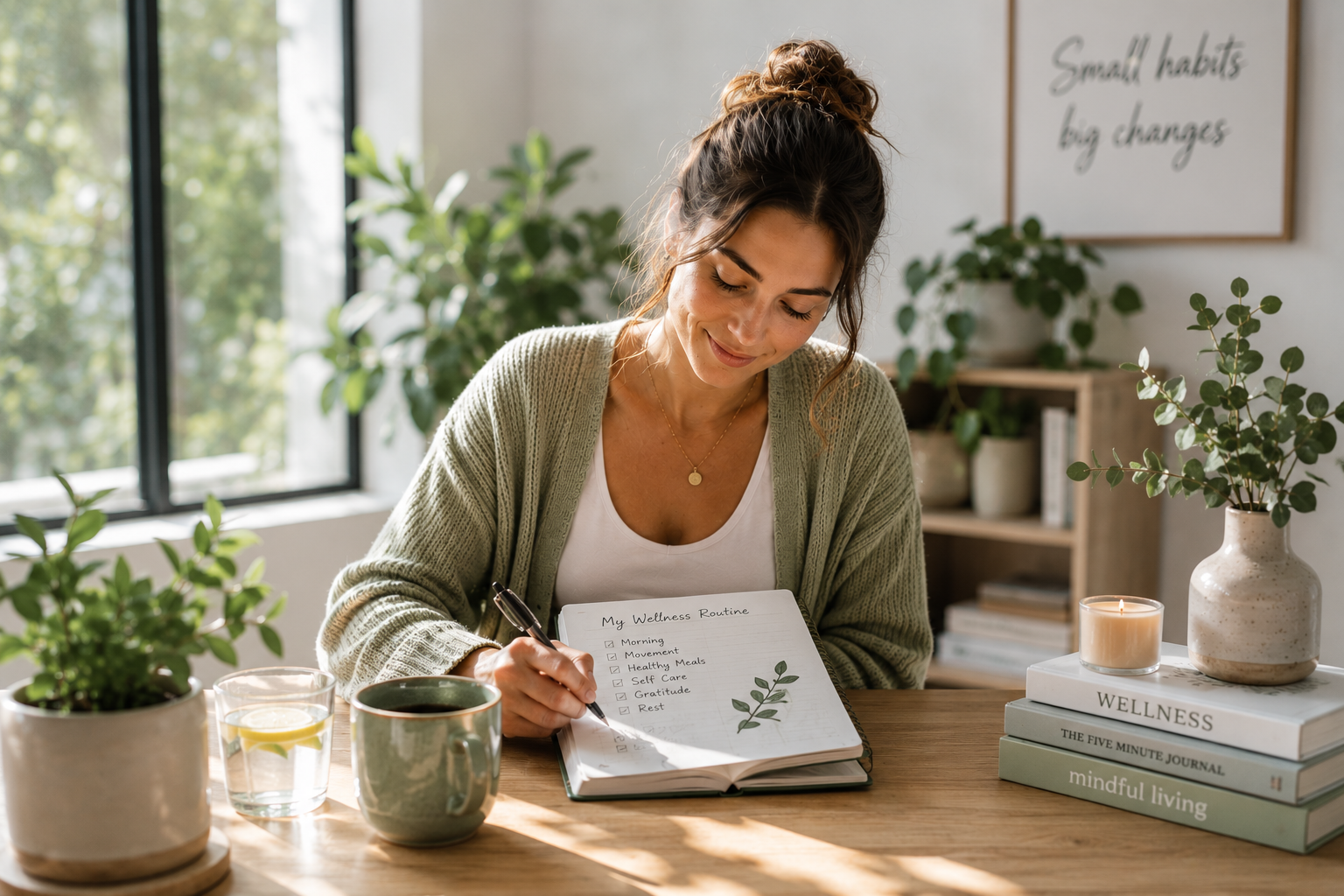
Simple methods such as a journal, planner, habit tracker, or digital app can help you monitor your progress without becoming overwhelmed.
Rather than focusing on perfection, pay attention to overall consistency.
If you miss a day, avoid viewing it as a failure. Instead, focus on returning to your routine as soon as possible.
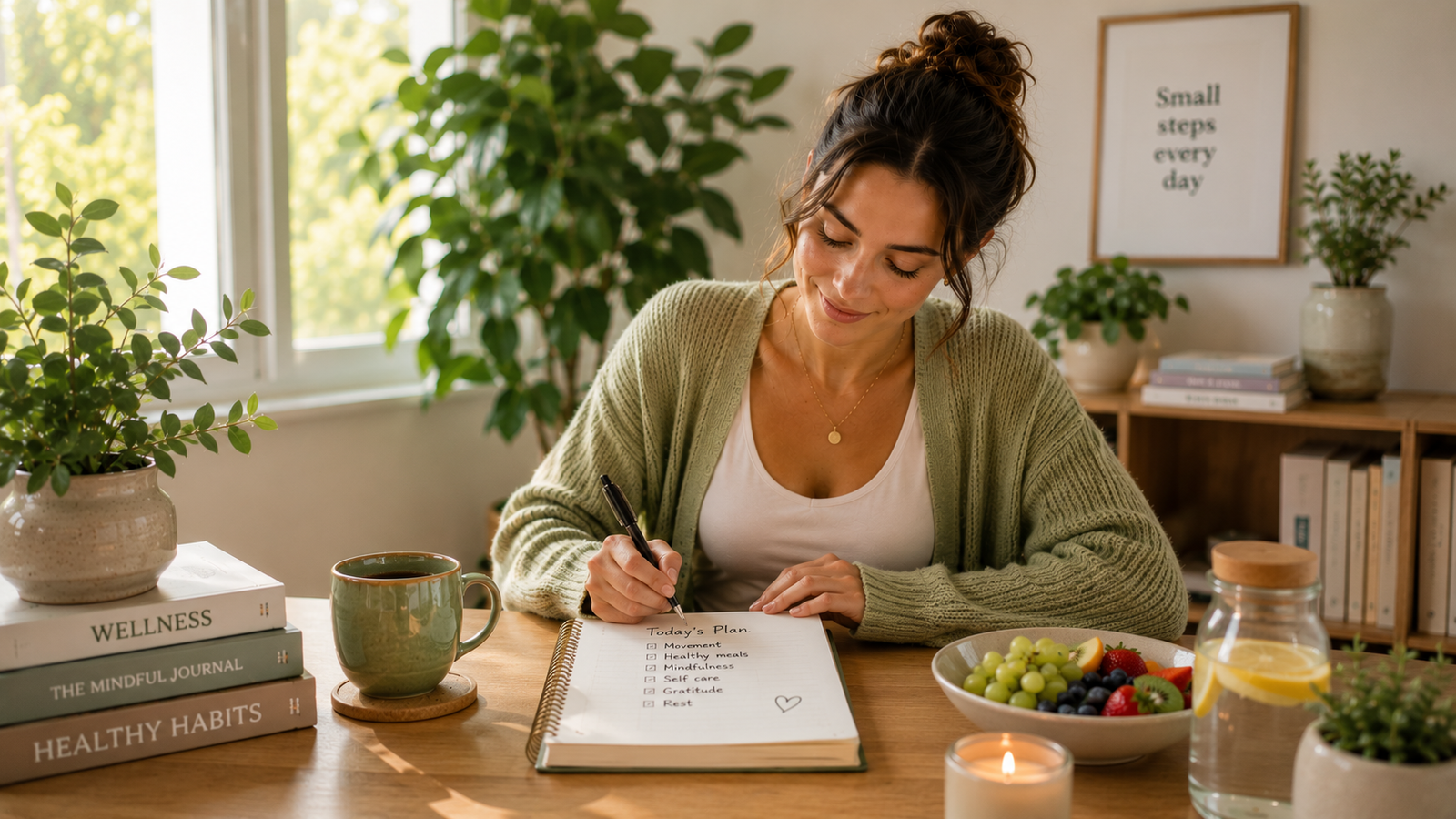
Tracking can provide valuable insights into what works best for you and help reinforce positive habits over time.
Remember that progress is rarely linear. Some weeks will feel easier than others, and that's completely normal.