Why Gut Health Matters
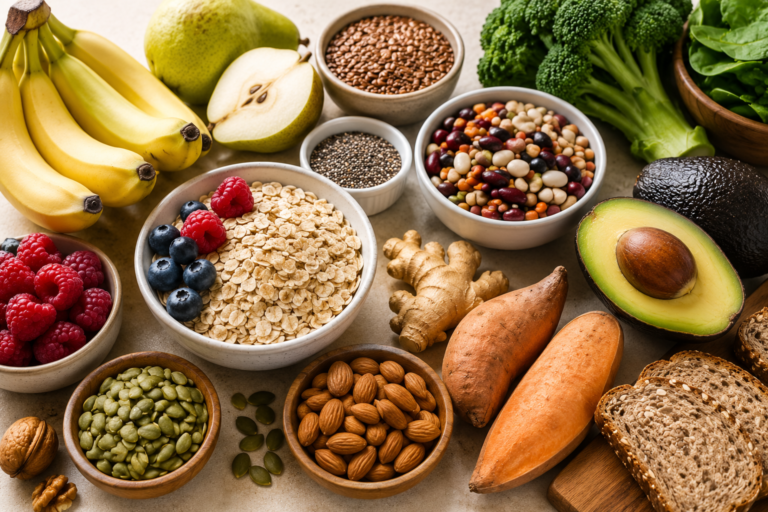
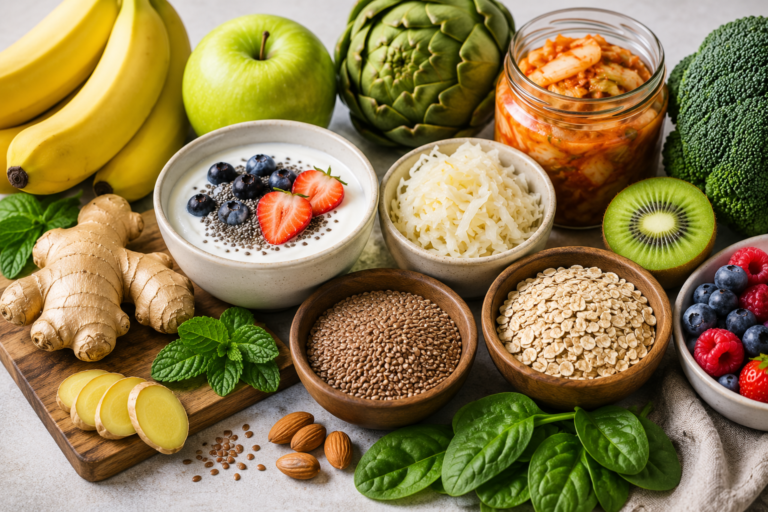
Gut health plays an important role in overall wellness. The digestive system is home to trillions of microorganisms that make up the gut microbiome, a complex community that helps support digestion, nutrient absorption, and many other bodily functions.
A balanced gut microbiome is often associated with healthy digestion and overall wellbeing. While many factors can influence gut health, diet is one of the most important. Eating a variety of nutrient-rich foods may help support a healthy gut environment and contribute to long-term wellness.
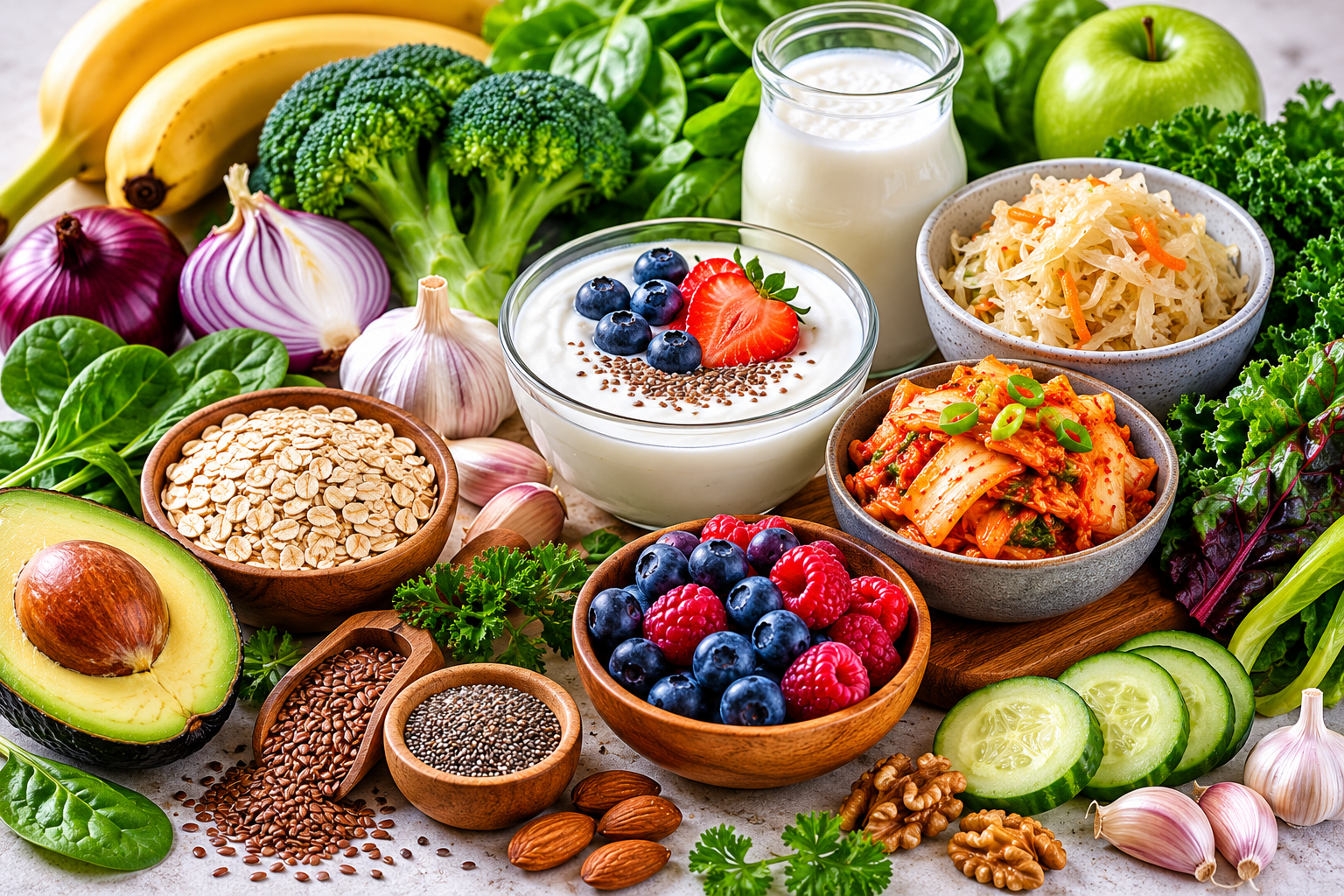
Many gut-friendly foods provide probiotics, prebiotics, fiber, vitamins, and minerals. Together, these nutrients help nourish beneficial gut bacteria and support digestive balance.
If you enjoyed our article on 10 High Fiber Foods For Better Digestive Health, you'll discover that many of those same foods also play an important role in supporting gut health.
1. Yogurt
Yogurt is one of the most popular foods associated with gut health. It naturally contains beneficial bacteria that may help support digestive wellness and contribute to a balanced gut microbiome.
Plain yogurt can be enjoyed on its own or paired with fruits, seeds, and nuts for a nutritious snack or breakfast option.
When choosing yogurt, many people prefer varieties with live and active cultures to maximize potential digestive benefits.
2. Kimchi
Kimchi is a traditional fermented food made from vegetables and seasonings. It is widely recognized as a source of probiotics and has become increasingly popular among those interested in gut health.
Its unique flavor makes it a versatile addition to grain bowls, salads, and other balanced meals.
Additionally, kimchi contains a variety of nutrients and plant compounds that contribute to a healthy dietary pattern.
3. Sauerkraut
Sauerkraut is made from fermented cabbage and is another well-known probiotic food. Through the fermentation process, beneficial bacteria develop naturally, creating a food that supports digestive wellness.
It can be served as a side dish, added to salads, or incorporated into a variety of recipes.
Furthermore, sauerkraut provides fiber and nutrients that complement a healthy eating plan.
4. Kefir
Kefir is a fermented dairy beverage that contains a diverse range of beneficial microorganisms. Many people include kefir in their diets as part of a gut-friendly lifestyle.
Its creamy texture and slightly tangy flavor make it easy to enjoy on its own or blended into smoothies.
Because kefir contains both probiotics and important nutrients, it is often included among the top foods for gut health.
5. Oats
Oats are widely recognized as one of the best sources of dietary fiber. They contain beta-glucan, a type of soluble fiber that may help support digestive health and contribute to a balanced gut environment.
In addition to their fiber content, oats are versatile and easy to include in everyday meals. They can be enjoyed as oatmeal, overnight oats, smoothies, or added to healthy baked recipes.
Moreover, oats provide nutrients that complement a healthy eating pattern and support overall wellness.
6. Bananas
Bananas are a convenient and nutritious fruit often included in gut-friendly diets. They contain natural compounds and dietary fiber that may help nourish beneficial gut bacteria.
Because bananas are easy to digest and widely available, they make an excellent snack option for people looking to support digestive wellness.
Additionally, bananas pair well with yogurt, oats, and smoothies, making them a simple addition to a balanced diet.
7. Garlic
Garlic is known not only for its flavor but also for its potential role in supporting gut health. It contains natural prebiotic compounds that may help feed beneficial bacteria within the digestive system.
Adding garlic to meals is an easy way to enhance both flavor and nutritional value. It works well in soups, sauces, roasted vegetables, and many home-cooked dishes.
Furthermore, garlic has been used in traditional diets around the world as part of a healthy lifestyle.
8. Onions
Onions are another valuable source of prebiotic compounds that may support a healthy gut microbiome. They are commonly used in a wide variety of recipes and contribute both flavor and nutrition.
Whether eaten raw, sautéed, roasted, or added to soups and salads, onions can be incorporated into meals in many different ways.
Similarly to garlic, onions provide compounds that help nourish beneficial gut bacteria and support digestive balance.
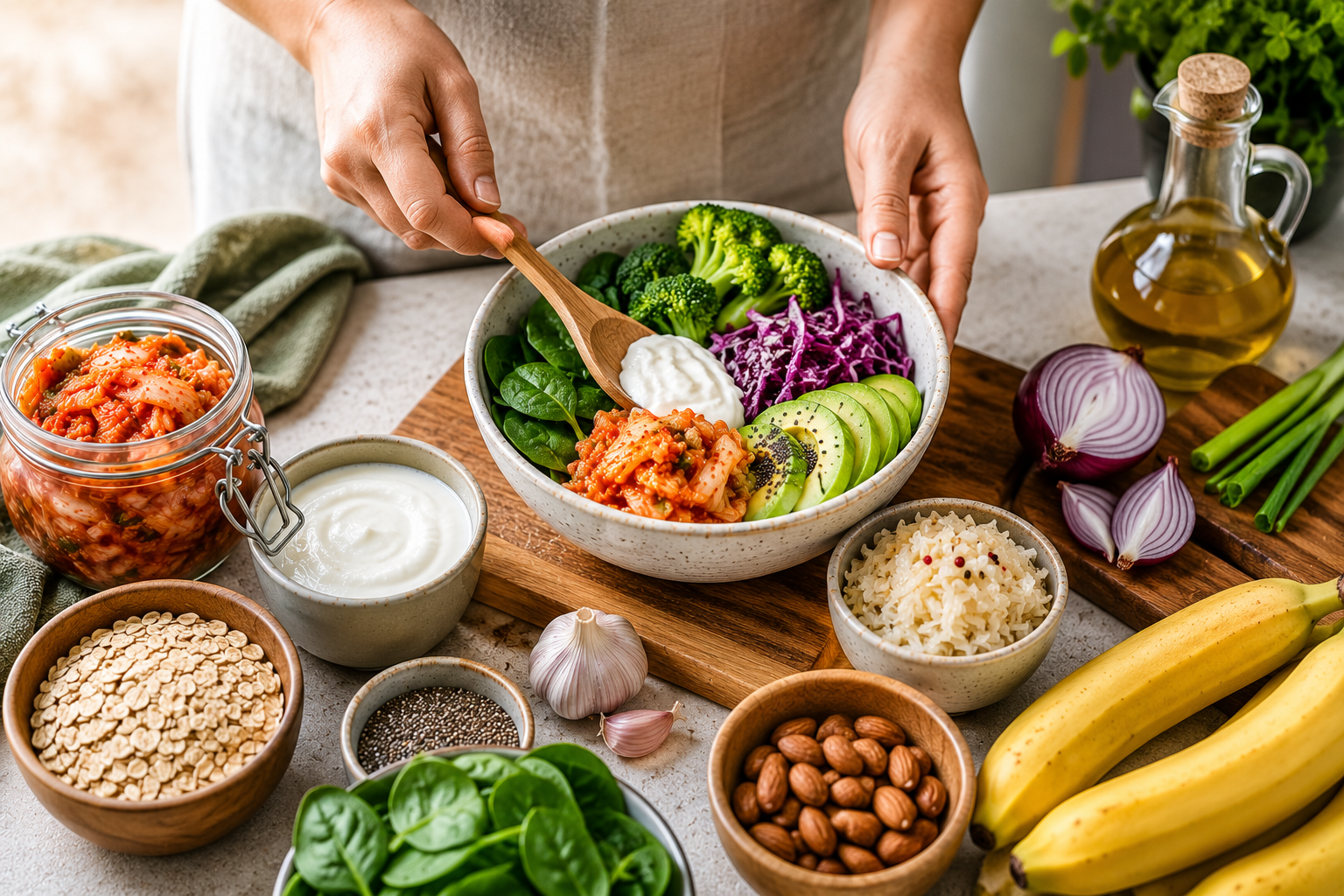
Simple Habits That Support Gut Health
While food plays a major role in digestive wellness, healthy daily habits can also contribute to maintaining a balanced gut microbiome.
- Eat a variety of fruits and vegetables regularly.
- Include probiotic and prebiotic foods in your meals.
- Stay properly hydrated throughout the day.
- Choose whole foods more often than highly processed foods.
- Maintain consistent meal patterns when possible.
- Engage in regular physical activity.
Additionally, combining healthy eating habits with an active lifestyle may help support overall digestive function and long-term wellness.
If you're interested in improving your overall nutrition, be sure to explore our guide to 10 Healthy Foods For Overall Wellness, which highlights nutrient-dense foods that support a balanced lifestyle.
9. Leafy Greens
Leafy greens such as spinach, kale, arugula, and Swiss chard are excellent additions to a gut-friendly diet. They provide dietary fiber, vitamins, minerals, and plant compounds that contribute to overall wellness.
Because leafy greens are incredibly versatile, they can be added to salads, smoothies, soups, wraps, and grain bowls. Including a variety of greens in your weekly meals can help increase nutrient intake while supporting digestive health.
Furthermore, leafy vegetables are often recommended as part of a balanced eating pattern that supports long-term wellbeing.
10. Avocados
Avocados are known for their healthy fats, but they also provide dietary fiber that may help support digestive wellness. Their creamy texture and mild flavor make them easy to incorporate into a wide variety of meals.
Avocados can be added to salads, sandwiches, grain bowls, and breakfast dishes. They pair especially well with vegetables, legumes, and whole grains commonly found in gut-friendly meal plans.
Additionally, avocados provide nutrients that support overall health while contributing to a balanced and satisfying diet.
How To Build A Gut Friendly Plate
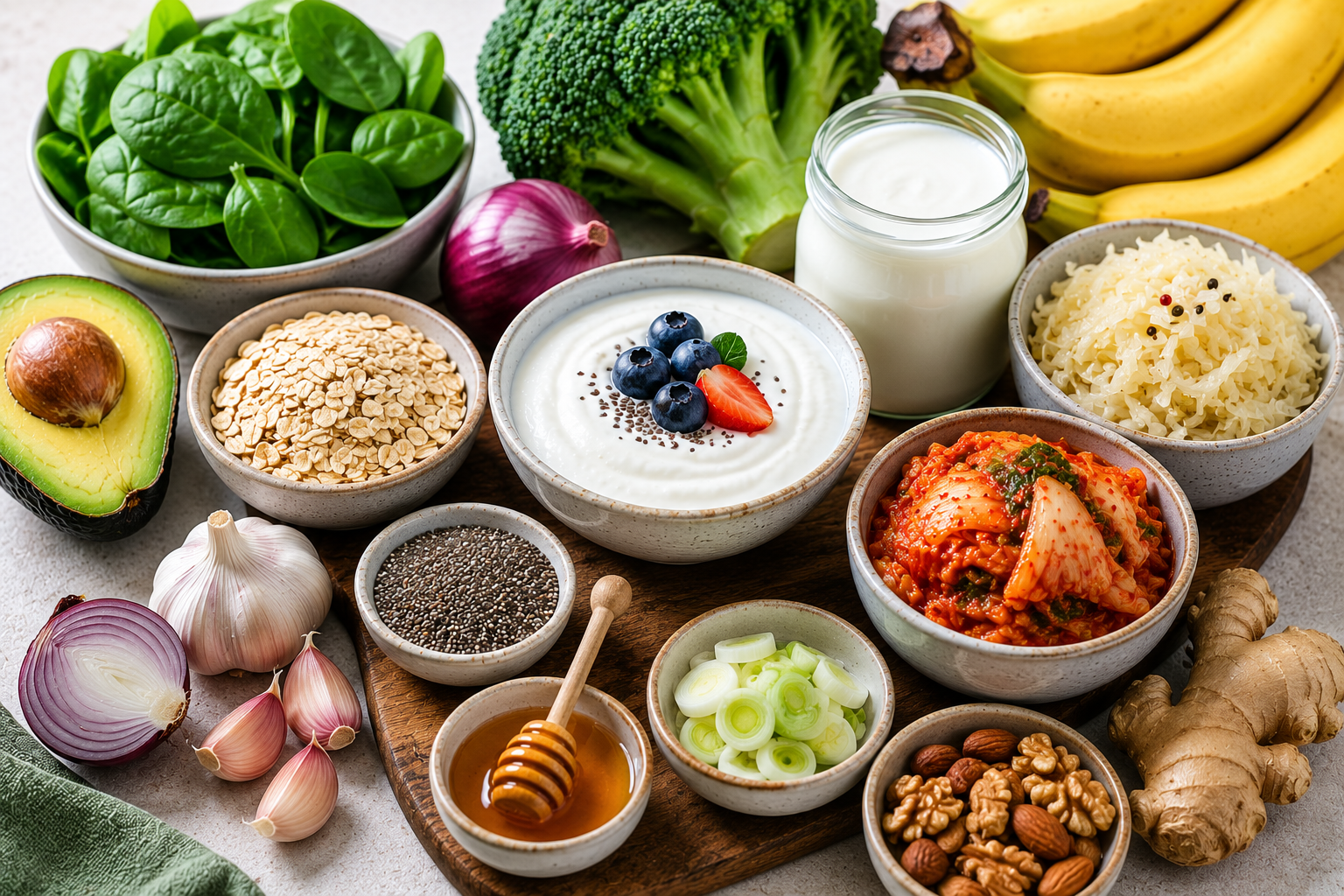
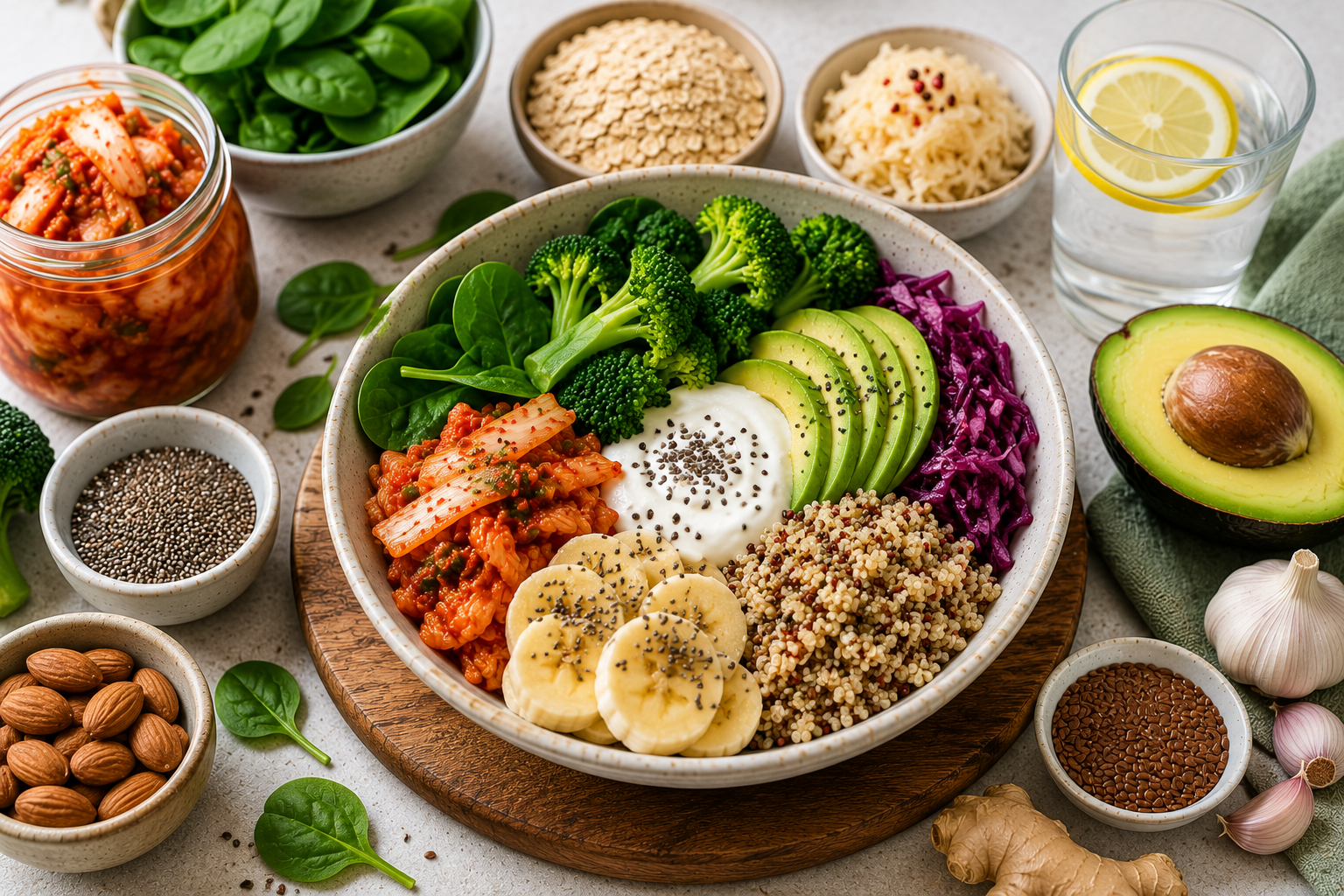
Creating meals that support gut health does not have to be complicated. A simple approach is to combine probiotic foods, prebiotic ingredients, fiber-rich foods, and nutrient-dense vegetables on the same plate.
A balanced gut-friendly meal may include:
- Fermented foods such as yogurt, kefir, kimchi, or sauerkraut.
- Fiber-rich foods such as oats, bananas, and leafy greens.
- Prebiotic foods such as garlic and onions.
- Healthy fats from avocados, nuts, and seeds.
- A variety of colorful vegetables and whole foods.
Combining these foods regularly may help support digestive wellness while providing important nutrients that contribute to overall health.
Conclusion
Supporting gut health starts with making healthy food choices consistently. Foods such as yogurt, kimchi, sauerkraut, kefir, oats, bananas, garlic, onions, leafy greens, and avocados provide nutrients that may help support a balanced gut microbiome and healthy digestion.
Additionally, combining probiotic foods, prebiotic ingredients, and fiber-rich foods can help create a more diverse and nutritious eating pattern. Small daily habits often have the greatest long-term impact on overall wellness.
By including a variety of gut-friendly foods in your meals and maintaining a balanced lifestyle, you can support digestive health while promoting overall wellbeing.
Frequently Asked Questions
What are the best foods for gut health?
Some of the most popular foods associated with gut health include yogurt, kefir, kimchi, sauerkraut, oats, bananas, garlic, onions, leafy greens, and avocados.
How can I improve gut health naturally?
Eating a balanced diet rich in probiotic foods, prebiotic ingredients, fiber-rich foods, and vegetables may help support a healthy gut microbiome and digestive wellness.
Are probiotic foods good for digestion?
Many probiotic foods contain beneficial bacteria that may help support digestive balance and overall gut health as part of a healthy diet.
What foods help support a healthy gut microbiome?
Foods such as yogurt, kimchi, sauerkraut, kefir, bananas, oats, garlic, onions, leafy greens, and avocados are commonly included in gut-friendly eating plans.
For more nutrition and wellness tips, explore our related guides on 10 Powerful Foods That Support Healthy Digestion and 10 High Fiber Foods For Better Digestive Health.